The Obsidian Registry · File 060
Subliminal Ads Were a Hoax. Then Scientists Proved Part of It Works.
The lie was harmless. The truth they found when they checked it was not.
Built on the real record of Subliminal Advertising. Every documented fact is numbered and cited at the end. The rest, use your own judgment.
logged · file_060.txt · 9.9 KB · recovered by
Intake record
| Recovered from | Estate of a former market research assistant, Fort Lee, New Jersey |
|---|---|
| Contents | A film reel splice (1957), a ledger of fabricated survey results, a letter to a granddaughter |
| Finder | Granddaughter |
| Status | The splice has been viewed under a projector at the speed described. The Archive does not recommend it. |
In 1957, a market researcher named James Vicary held a press conference in New York that terrified America.
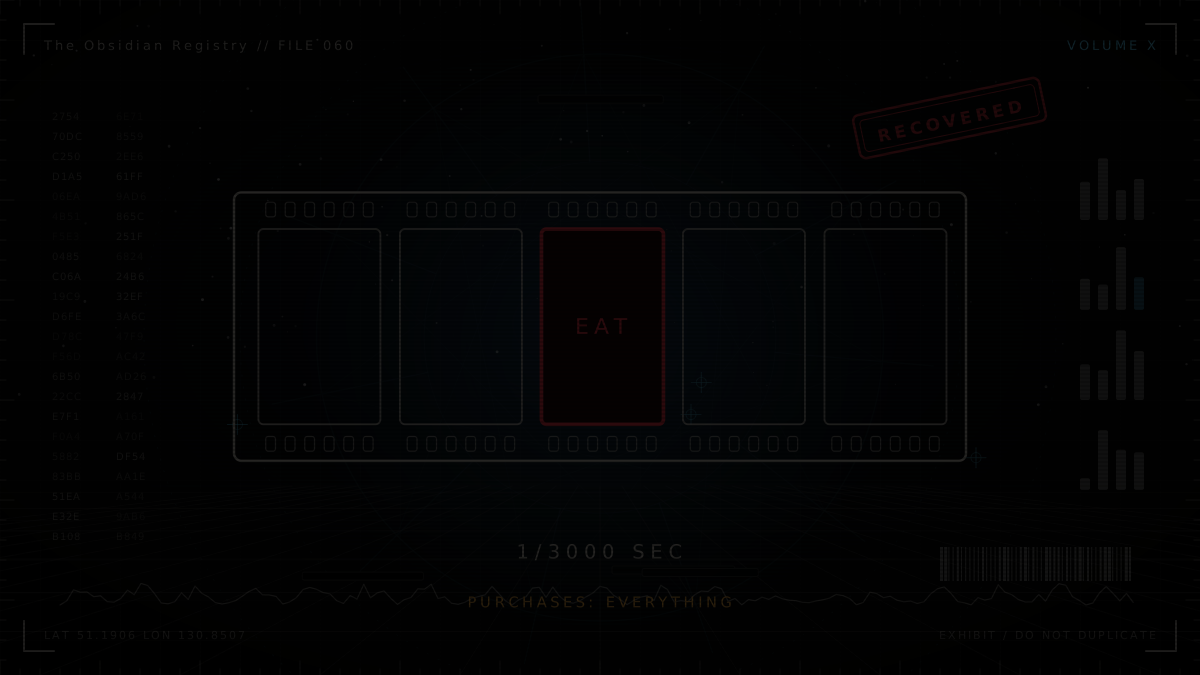
He said he had conducted an experiment at a movie theater in Fort Lee, New Jersey. During the film, he said, he had flashed two messages on the screen, so quickly that the audience could not consciously see them: Eat Popcorn and Drink Coca-Cola. Each message, he said, appeared for a tiny fraction of a second, every five seconds. Over six weeks and more than forty-five thousand moviegoers, he claimed, Coca-Cola sales rose by about eighteen percent and popcorn sales by nearly fifty-eight percent.1
He called it subliminal advertising. The public reaction was immediate and fierce. Magazines warned of a coming age of invisible mind control. A bestselling book about hidden persuasion, published the same year, was already on every nightstand.1 In 1958, the major broadcasting networks banned subliminal messages, and later the Federal Communications Commission declared such techniques contrary to the public interest.2
In 1962, Vicary admitted in an interview with Advertising Age that his experiment had been a gimmick. He said the amount of data had been too small to mean anything. Many researchers believe he never ran the experiment at all.1
For decades, subliminal advertising was treated as a hoax. A famous example of a moral panic over nothing.
Then scientists went back and tested it properly.
In 2006, researchers in the Netherlands flashed the name of a brand of iced tea on a screen, too fast for participants to see it consciously. Afterward, participants who were thirsty were significantly more likely to choose that brand. People who were not thirsty were not affected. Subliminal messages, the researchers concluded, could not make people want something they did not want. But they could steer what people chose when they already wanted something.3
Vicary had lied. And what he had lied about was, in a narrower and quieter way, real.

Remaining record sealed · 2 known copies
This is where they stopped the last reader.
You have read the part that leaked. The ending, the 4 cited sources, and the archivist's note are still sealed.
This file
File 060
$2.99
- The full file, unredacted
- Sources and archivist note
- Instant access
This volume
Volume X: You Already Said Yes
$9.99
- All 5 files in this volume
- Every source, every archivist note
- Yours to keep. Read on any device.
Every file is original fiction built on real, cited records. The records and sources are real. The characters and endings are made up. How it works
Delivery: instant, PDF + EPUBReads anywhereUnread? Refund within 14 daysCard checkout through our processor
Want all of it instead? , about 39¢ a file.
Not ready to break the seal?
The Archive opens on October 31. Join the priority list for 20% off when the Vault opens, plus File 027 free in full tonight.Leave your email and get File 027 free in full, plus a warning the moment a new file is unsealed.
No spam. We barely email. One click to leave.