The Obsidian Registry · File 101
Chicago Was Warned About the Crack in January. Something Else Came Through.
Every city keeps a basement it would rather forget. The river never forgets anything.
Built on the real record of The 1992 Chicago Tunnel Flood. Every documented fact is numbered and cited at the end. The rest, use your own judgment.
logged · file_101.txt · 13.4 KB · recovered by
Intake record
| Recovered from | Sub-basement of an office tower on LaSalle Street, Chicago; behind a bricked-up tunnel doorway |
|---|---|
| Contents | A motorman's logbook (1931), a brass bulkhead key, a 1992 cable TV work order with a handwritten note |
| Finder | Denise Okoro, building chief engineer |
| Status | The tunnels and the flood are documented. The logbook in this file is not on record. |
Forty feet under the skyscrapers of downtown Chicago there is a second city made of tunnels.1
They were dug in the early 1900s. Narrow-gauge railroad tracks ran through them, and small electric trains hauled coal to building furnaces, and freight to department stores, and carried ash and trash away. At their peak they stretched for dozens of miles, under almost every street in the Loop, with connections into the basements of the buildings above.1
Then trucks got better. The tunnel company went bankrupt. By the late 1950s the trains stopped running.1 The doors into the buildings were bricked up or forgotten. Chicago more or less forgot the tunnels were there.
The river did not.
In 1991, workers replacing the wooden pilings that protect the Kinzie Street Bridge drove new pilings into the bed of the Chicago River. The pilings pushed the soil against the wall of an old freight tunnel that ran under the river.2 The wall cracked.
In January 1992, a cable TV crew working in the tunnels spotted the damage. Water was seeping in. They reported it to the city.2
The repair was delayed. Paperwork. Bids. Months went by.2
On the morning of April 13, 1992, a whirlpool appeared in the river at Kinzie Street. The crack had become a hole. An estimated 250 million gallons of river water poured into the tunnels and spread under the whole Loop, flooding the sub-basements of buildings across downtown.2
Power was cut. Buildings were evacuated. Marshall Field's lost its stock. The Art Institute's lower levels were damaged. The losses were estimated at nearly two billion dollars.2
It took weeks to pump the water out.
What nobody asked, at the time, was whether anything came in with it. Or went out.
Denise Okoro had been chief engineer of a LaSalle Street office tower for nineteen years. She knew every pipe in it. Every pump. Every crack in the foundation.
So when the sub-basement started flooding in October, a little more every week, she was the one who went down to look.
The water was coming from behind an old brick wall at the back of the lowest level. She had walked past that wall a thousand times. It was the only part of the building that was older than the building.
She pulled a few bricks loose. Behind them was an archway. Beyond the archway, darkness, and the smell of river, and the sound of water moving very slowly.
A freight tunnel. Bricked up for sixty years.
On a ledge just inside the arch sat a tin box. Inside it were a logbook with a cracked leather cover, a heavy brass key, and a folded sheet of paper.
The paper was a cable TV work order from January 1992. A technician's report of damage to a tunnel wall near Kinzie Street. Seepage observed. Recommend immediate repair.
At the bottom, in pen, someone had written a note.
They said they'd get to it. They won't. The bulkheads won't hold it if the river comes in. Somebody has to close the doors.
The logbook was older. 1931. It belonged to a motorman named Stan Kowalski, who drove the little freight trains. Most of it was routine. Cars hauled. Stops made.
The last page was different.
The company says the tunnels go under the river in three places. That's what the maps say. That is not true. There is a fourth.
Nobody dug the fourth. It was there when we broke through in 1904. The old men say the river made it, a long time ago, before there was a city. The river was here first. It does not like sharing.
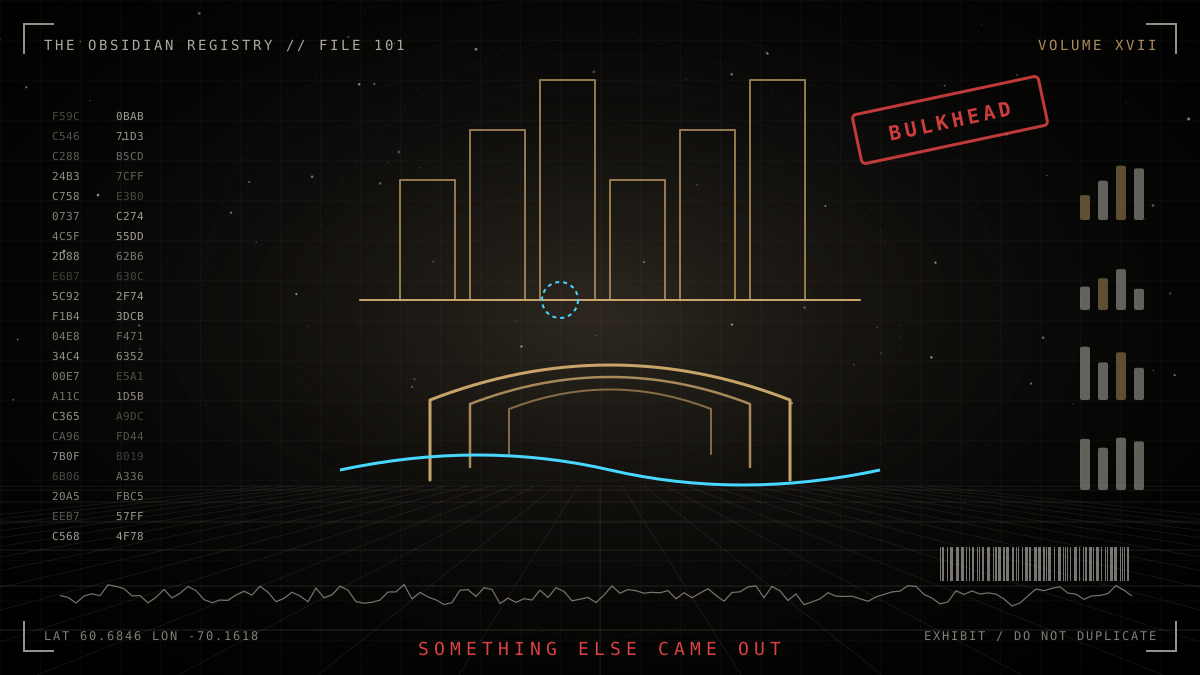
We put iron bulkheads across the fourth tunnel and we lock them. The key stays with the motorman on the night shift. The rule never changes.
Never open a bulkhead toward the river. The water will come in. Something else will come out.

Remaining record sealed · 7 known copies
This is where they stopped the last reader.
You have read the part that leaked. The ending, the 2 cited sources, and the archivist's note are still sealed.
This file
File 101
$2.99
- The full file, unredacted
- Sources and archivist note
- Instant access
This volume
Volume XVII: Not on Any Map
$12.99
- All 8 files in this volume
- Every source, every archivist note
- Yours to keep. Read on any device.
Every file is original fiction built on real, cited records. The records and sources are real. The characters and endings are made up. How it works
Delivery: instant, PDF + EPUBReads anywhereUnread? Refund within 14 daysCard checkout through our processor
Want all of it instead? , about 39¢ a file.
Not ready to break the seal?
The Archive opens on October 31. Join the priority list for 20% off when the Vault opens, plus File 027 free in full tonight.Leave your email and get File 027 free in full, plus a warning the moment a new file is unsealed.
No spam. We barely email. One click to leave.