The Obsidian Registry · File 127
In Old Family Photos, One Person Is Already Dead. In This One, It's the Photographer.
The last file in the Archive. Hold still. It will only take a moment.
Built on the real record of Victorian Post-Mortem Photography. Every documented fact is numbered and cited at the end. The rest, use your own judgment.
logged · file_127.txt · 8.7 KB · recovered by
Intake record
| Recovered from | Estate sale, Galena, Illinois, inside a velvet-lined photograph case |
|---|---|
| Contents | A daguerreotype in a hinged case, a photographer's appointment book from 1851, a modern photo scan with metadata, a note addressed to the Archive itself |
| Finder | The Archive (see below) |
| Status | Post-mortem photography is documented. This file is the only one in the Archive that was sent to us by its subject. |
Photography was invented in 1839.1 For the first time in history, an ordinary family could have a picture of someone they loved that looked exactly like them. Not a painting. Them.
It was expensive. A portrait might cost a week's wages. Many families had only one taken in their whole lives.1
For many families, that one photograph was taken after someone died.1
In the 1800s, many children did not live to grow up. Diseases like diphtheria, cholera and scarlet fever killed thousands. When a child died, a grieving family might realize they had no picture of her. Not one. And soon there would be nothing left of her face at all.1
So they called the photographer.
He came to the house. The child was dressed in her best clothes, often laid on a bed or a sofa, or held in her mother's arms, as if asleep. Sometimes her eyes were painted open on the print afterward. Sometimes flowers were placed in her hands.1
The photograph was called a memorial portrait, or a memento mori, a Latin phrase meaning remember that you will die. Families kept them in velvet cases, hung them on walls, carried them in lockets.1
The practice was common for decades and faded by the early 1900s, as more people owned cameras and fewer children died young.1
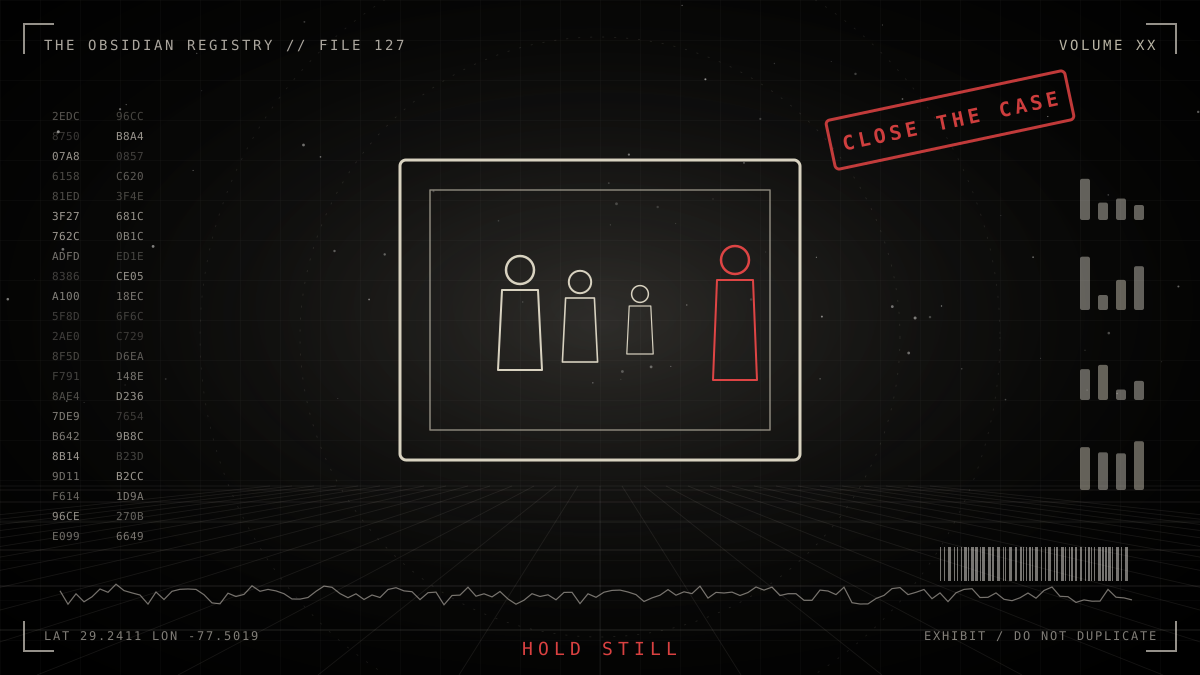
There is a popular myth about these photographs. It says that photographers used metal stands to prop up the dead so they would look alive, standing, with open eyes. Pictures online claim to show standing corpses.2
Historians who study the photographs say this is almost always wrong. Early cameras needed long exposures, so photographers used stands to hold the living still. The people in the standing photographs were alive. The dead were usually shown lying down, peaceful, looking asleep.2
The living were the ones who had to be held up.

Remaining record sealed · 3 known copies
This is where they stopped the last reader.
You have read the part that leaked. The ending, the 2 cited sources, and the archivist's note are still sealed.
This file
File 127
$2.99
- The full file, unredacted
- Sources and archivist note
- Instant access
This volume
Volume XX: The Dead Are Still Working
$12.99
- All 8 files in this volume
- Every source, every archivist note
- Yours to keep. Read on any device.
Every file is original fiction built on real, cited records. The records and sources are real. The characters and endings are made up. How it works
Delivery: instant, PDF + EPUBReads anywhereUnread? Refund within 14 daysCard checkout through our processor
Want all of it instead? , about 39¢ a file.
Not ready to break the seal?
The Archive opens on October 31. Join the priority list for 20% off when the Vault opens, plus File 027 free in full tonight.Leave your email and get File 027 free in full, plus a warning the moment a new file is unsealed.
No spam. We barely email. One click to leave.